
The Thin Wall Between Us
The Graveyard Answer: When UNHCR Stays Silent, Who Speaks for the Detainees?

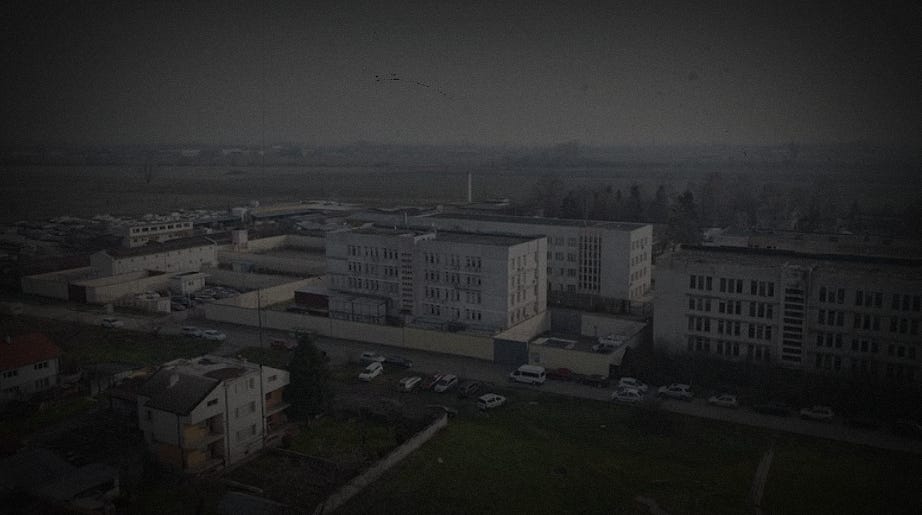
On February 10, 2026, New York Times published a major report12 on the Busmantsi detention center, on the story of my friend Hesham, and on the controversial Dublin Regulation3.
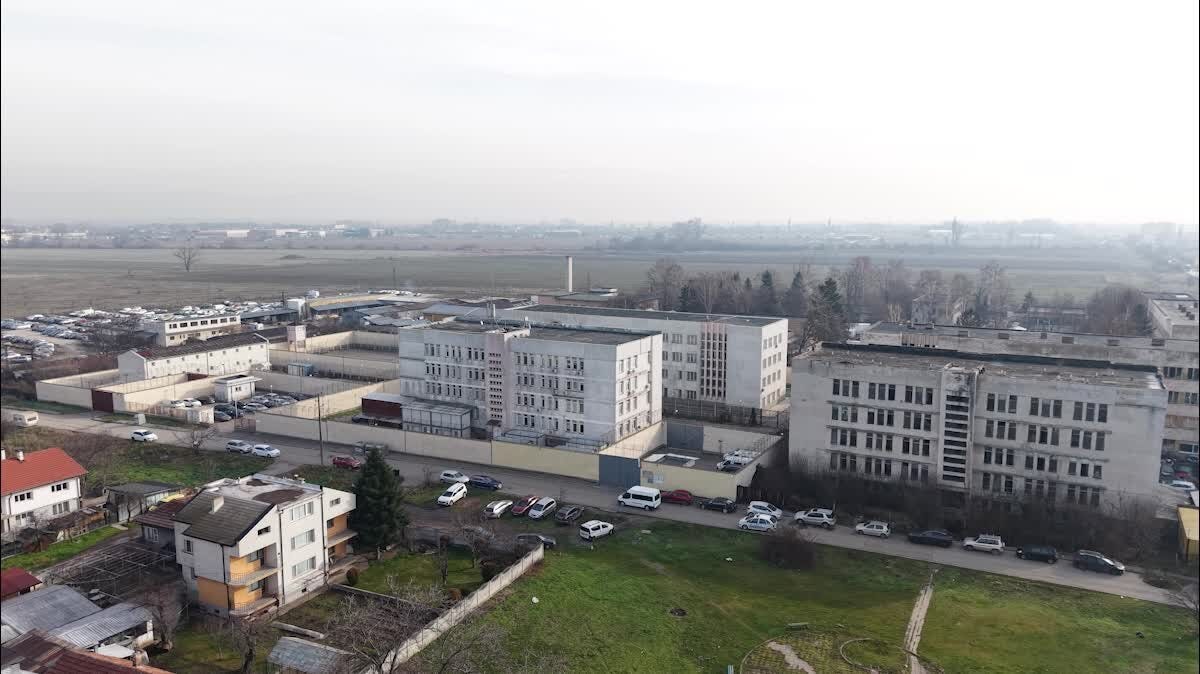
Hesham is now staying right next to my room in the Lyubimets detention center. A single thin wall is all that separates us. We meet every day from morning until evening. I came to know him only a few days after his arrival, when Astrid Schreiber highlighted his case and referred it to her contacts in Bulgaria, among whom I am honored to be one.
Hesham is from the city of Darayya near the capital, Damascus — a major cultural center whose families contributed to the development of the capital and many Arab capitals. Usually, its people do not work as laborers but as investors in Saudi Arabia and other countries. They are educated and intelligent, and Hesham is no exception, as the son of a respected and well-known family of distinguished lineage.
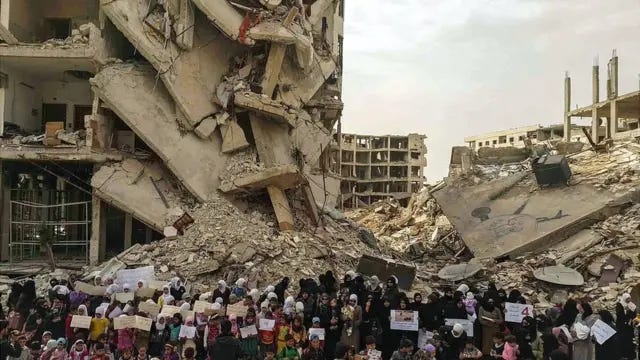
In my view, this distinct profile of the citizens of Darayya reflects generations of social stability, access to education, and selective marriage patterns prioritising societal, economic, and individual status.
Hesham grew up an orphan, kind and well-mannered. The war completely destroyed his city, and the Assad regime used chemical weapons to exterminate its inhabitants. They lived under a suffocating siege without the basics of life — people drank leftover water from inside cars — and under the control of armed Islamist factions during the siege.
A historic horror lives in Hesham’s bones, a social memory filled with tragedies, pain, and the bodies of children suffocated by chemical weapons and destruction. This gentle, kind face — and a remarkable talent in cooking; he can magically turn any dish into a five-star meal — carries more than any heart or mind can bear. He barely speaks two words throughout the day, with a calm smile and a respectful tone.
He and his family finally sought refuge in Germany in the hope of repairing what years of war had stolen from him — his childhood — but he was transferred back to Bulgaria under the Dublin Regulation, until he began crying in his sleep from grief, pain, and separation from his family.
In Arab and Islamic heritage, there is a famous historical saying that shaped how many in our region came to see the West as an example and a refuge. Amr ibn al-Aas said about the Romans (meaning the people of the Roman Empire — today understood as Western peoples):
“They possess four qualities: they are the quickest to recover after defeat; the best toward the poor, the needy, and the weak; the most forbearing in times of strife; and a fourth beautiful quality — the most resistant to the injustice of rulers.”
(Musnad Ahmad 17334)
While many express astonishment at ICE-style detention on European soil, there is much that has not been said — far more than a hundred articles could cover. These are documented cases I have worked on, archived, and reported to local and international organizations from 2021 to 2026, documented, archived, and reported to local organizations and various international entities.
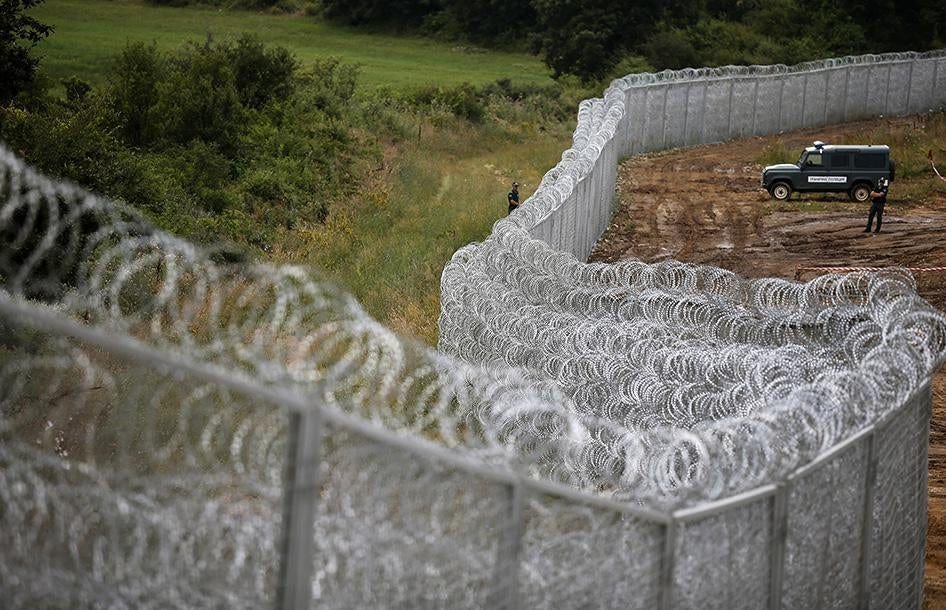
The Bulgarian government and Bulgarian organizations were not an exception. We repeatedly demanded investigations into numerous violations and expressed readiness to cooperate with the authorities. There should never have been a need to contact organizations simply because police refused to allow baby formula in for one-year-old infants, claiming they must now eat adult food. Nor should anyone have needed to report the case of Igra, the elderly Russian man with amputated legs and a prosthetic pelvis, forced to use a floor toilet, we have to carry him and his Wheelchair up and down the stairs every time.
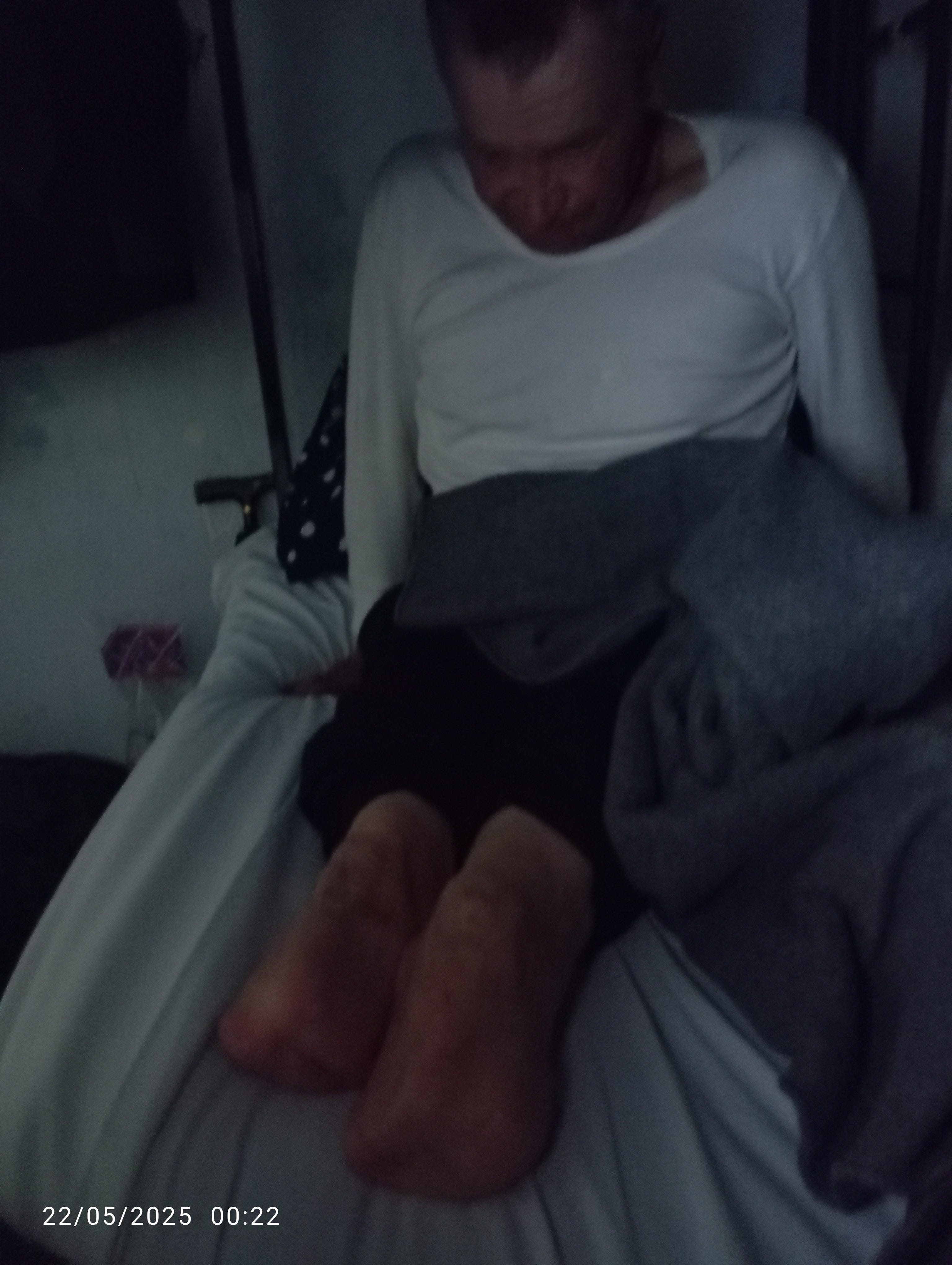
There was also the young man Mubeen, who lacked mental capacity and faced severe torture: police beat him violently and continuously, placed him in solitary confinement, and in cold weather poured water over his bed and blanket so he could neither sleep nor sit — pure sadistic behavior without justification.
And the case of Ahmed, who held valid residency in Germany and whose sister is a French citizen. Upon arrival in Busmantsi, his essential psychiatric medication was stopped. As his condition deteriorated, he became an easy target for beatings until he lost the ability to walk for days. Police dragged him to the shower under kicks, blows, and humiliation. He was later thrown onto the Romanian border, his phone and money and all documents confiscated, in an opaque procedure. After that he deported to Syria, and doctors diagnosed him with multiple sclerosis as a result of torture, psychological pain, and severe stress.
There is also Andrei, a Ukrainian man with profound mental disability who sometimes cannot recognize where he is or find a toilet, suffering auditory and visual hallucinations and speaking to people who are not there. A woman in his section told me he hides in the bathroom at night, standing motionless for hours. How could he manage legal procedures or communicate with lawyers? He could not.

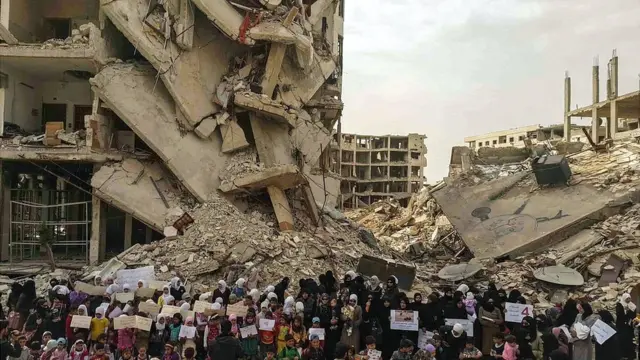
In my first article, A Letter from Busmantsi, It was a very long draft in which I mentioned other terrifying cases of women and other people at that time, but I shortened it greatly.
For those who ask why I speak now: I hold a full archive of complaints, documents, and photographs sent to UNHCR, the Bulgarian Helsinki Committee, the Red Cross, the Bulgarian Ombudsman, and others, including Members of the European Parliament, like Ilaria Salis, Krzysztof Śmiszek, Cecilia Strada, Erik Marquardt. Responses were extremely limited. UNHCR, despite its supervisory mandate over Busmantsi, remained as silent as a graveyard toward almost everything and does not bother to open an investigation, reply to emails, or even give me a reference number!
Despite public anger toward Interior Minister Mitov, I personally respect his regular follow-up on my case. Yet he made a shocking statement blaming detainees and claiming traffickers teach them how to complain.
But he made a very strange statement in this paragraph:
“As for the conditions inside Busmantsi, Mitov blamed the refugees. ‘Quite often, the people who stay there do not appreciate the environment,’ he remarked dryly. ‘You’re saying that people staying inside damage the facility?’ I asked. ‘Yes,’ he said. ‘The human traffickers are giving them advice to treat the facilities in ways that afterward they can complain.’”
How can a statesman leap to conspiracy theories against vulnerable people asking only for oversight and accountability? They did not appeal to NATO or Russia but to him. They trusted his sense of responsibility and the rule of law.
As the saying goes: If your adversary is the judge, to whom do you appeal?
I admit that I helped some detainees explain how to file complaints with the Ministry of Interior directorates and the Ombudsman. There were no leftist organizations or foreign entities, and no human traffickers involved—quite the opposite: human traffickers actually push for greater brutality against detainees to extort money from them! In fact, I sought help from several people because I cannot handle all these cases along with my own current case and escalating problems, but I found no truly effective help. I have copies of all the complaints that the minister claims are part of an alleged conspiracy, and they are terrifying—politely and with great respect requesting that the matter enter their sphere of interest and that the Ministry of Interior itself investigate the violations. At the end of January, one detainee misunderstood that a policeman was telling him to go downstairs; he headed toward the stairs and only turned his face without descending. Police officers took him into their room without cameras, beat him severely, grabbed his face, and slammed him on the table. He came out with his face full of blood in a horrifying scene. There were witnesses to the beating in the room; we all saw the blood on his face, his terror, and his pain. I am a detainee like them; I feel for them, while Minister Mitev does not feel it.
One of the detainees told me after a random police assault on him:
“My father loved me; he never hit me in his life. My community respected me greatly. Why do these people treat me this way just for humiliation?”
Has the minister ever heard an officer shouting before lock-up:
“Come out, you dogs… Bokluk… Mangal… trash!”
It’s not as if Bulgarians have never migrated, but the usual double standards make us forget that!
Personally, in early April 2024, I myself was subjected to prolonged and continuous violence under Interior Minister Kalin Stoyanov, and he was questioned in writing in the Bulgarian Parliament by MP Stella Nikolova. But he considered it “manipulative self-harm behavior” that police officers tried to control! That I beat myself for over an hour inside the bathrooms away from cameras with two police officers, tore my clothes, then police officers dragged me handcuffed to a second toilet on the second floor against my will, pulling me hard to beat me again with officers—where this entire incriminating part was deleted from the camera recordings in evidence tampering, and the prosecutor deleted it from his report. I am the one who filed the report myself initially; I requested a forensic doctor to determine the tool used to beat me—was it concrete blows or police fists? They took me to the Ministry of Interior hospital after 4 days without a personal examination, just an X-ray saying no fractures, and that was it—nothing happened!
The impunity mechanism was terrifying. One of the police officers I respected at the time told me:
“I sympathize with you. But in the end, I will stand with my colleagues.”
It does not require leftist movements or brutal criminal human traffickers for a detainee to feel the pain of detention, bad food, deliberate humiliation, the oppression of the wronged, or pain after a police assault, or the abandonment of the universe—including the rule-of-law state in which you live.
Impunity was complete.
Yet, among the detainees, I feel them, I love them. I ask the thief to watch my precious things from theft, and he refuses to let anyone touch anything of mine. These weak, forgotten people love me, respect me, and I reciprocate the same. I listen to their suffering, and it weighs on me. A minor boy tells me how his father sold his house and 4 cows—everything they owned—to send him for a better future to study in the land of civilization, Bulgaria, to build a future and help them a little.
I have seen the desperate who cry over their children and wives and the paralysis of their lives due to inability to work and help. I feel you. It does not require right-wing or left-wing ideology, religions, or ideas from me. I saw among them how I grew up with privileges in a wonderful childhood, a stable family, good financial status, and private education—we lost all of that and gathered together because of injustice and tyranny in our countries, toward the model of freedom and democracy, transparency and accountability that we aspire to and wish to replicate in our homelands. We have no billionaires, no pressure lobbies, no administrative offices, assistants, or structures behind us—we have only each other. I went through a phase where I tried myself to divide the money in my hand to buy essential medicines for some detainees when the state could not provide them. I sent to families of some detainees in Sofia who had emergency situations some of what I had or what my cellmate had—our possessions are little, but much for them. I asked my Bulgarian friends for used men’s, women’s, and children’s clothes to distribute to people detained in summer who shiver in winter teeth chattering, until we received exceptional help—despite the scarcity and limitations—from the Migrant solidarity in Bulgaria, a group of young Bulgarians who try to share their personal pocket money despite their university studies or simple jobs as baristas or coffee shop service—to help buy medicines for me and others, pay my phone bill, buy milk and toys for children, women’s specific needs, and diet food for the sick. The scope of help became broader and more efficient with simple, pure collective solidarity in its purest form of solidarity and love without budgets or thousands in accounts.
We have no wealth, no lobbyists, no institutions — only each other. We shared medicine, clothes, phone credit, milk for children. Bulgarian youth, despite limited means, helped with extraordinary solidarity.
Do you know the luxury of someone calling you from the African desert, with whom I spent two months, to check on your health, your warmth, and whether you are eating well? Do you know the feeling of a lady calling you continuously to check on you and shower you with prayers every month because her minor son respects you for protecting him from others’ exploitation? Do you know the luxury of someone calling you despite weak internet and no electricity in his country after returning, just to make you laugh at our situations together in detention?
I am in a luxury you do not know, among hearts that need nothing from me and I need nothing from them. We laugh a pure laugh and cry a pure cry together without need for deep meanings or existential philosophical explanations to define tragedy or happiness.
I live among hearts that need nothing from me, and I from them. We laugh purely. We cry purely. Someone once joked, after I shared half a Snickers and half my coffee cup due to economic austerity:
“Why are you treating me with such kindness? Do you intend to sleep with me?” :)
Minister Mitov, you hold unlimited authority over me. Yet I have not lost faith in justice, oversight, transparency, or the rule of law in Bulgaria.
Mr. Minister Mitev, I have no authority over you, and you have unlimited authority over me as a detainee under your power.
But I apologize to Minister of Interior because I have not yet despaired of the justice system in Bulgaria, have not yet despaired of oversight, transparency, and accountability, and have not yet despaired of the rule of law in this country.
Thank you to the distinguished journalist Caitlin L. Chandler, author of this historic piece, whom I was honored to meet during a visit to Busmantsi. We talked a lot, shared information with each other, and continued exchanging information and communication in the hope of conveying reality from a perspective that transcends ivory towers.
Thank you to Astrid Schreiber, the woman whom history will remember and immortalize her work one day—without whom this report would not exist—and to Victor Lilov, who always works with greatness that surpasses entire international organizations and institutions, the man who replaced the word “no” with “how?” How to help? How to contact the person? How to know the person’s room in the hospital to accompany him? What you know about this is little, but what I know is much, engraved in my bones. To Diana Radoslavova and Diana Dimova and to Migrant Solidarity in Bulgaria.
Freedom for Hesham,
Freedom for all detainees,
Freedom and Glory for those whose moans only the night hears, and whose tears only the moon of long nights and time that does not pass witness.
Freedom for those whose sun of life was veiled against their will.
And who were buried in concrete graves while still breathing!
[Editor’s Note] Being imprisoned makes many things extremely difficult—including writing autonomously on this platform. I (Luis Leite) am helping to publish this text on behalf of the detained activist, who wrote these words himself. The state cannot silence what we refuse to let die in darkness.
This testimony cannot be buried. This is what administrative detention does to the human body and mind—and the system wants you to look away.
Subscribe this newsletter to receive unfiltered dispatches from detention. Share this widely. Spread the word to those who still believe silence protects them.
You can follow him on 1) instagram alkhabd1 2) Facebook Alkhabd21
The revolution starts when we refuse to let them erase these stories.
This article provides an in-depth report on the Busmantsi detention center in Bulgaria, illustrating the systemic shift in European migration policy toward prolonged administrative detention and "externalization" of borders.
Published February 10, 2026 (NYT online)
Under the Dublin Regulation, responsibility for asylum claims falls on the country of first entry. Critics argue this creates a geographic imbalance, trapping migrants in "frontline" countries with poor detention records, such as Bulgaria’s Busmantsi facility, while allowing interior EU states to return applicants to their initial point of entry.
Thank you for keeping hope, for writing, for resisting. You are not alone 🫂